

If you are building a custom home, you should absolutely carry a contingency.
That is not to fudge the budget. That is smart construction finance. A contingency is supposed to protect the borrower, the builder, and the lender from the ordinary surprises that show up in real construction. Price changes, site issues, change orders are part of the process. The American Institute of Architects describes a contingency as a predetermined amount or percentage in the project budget to cover unpredictable changes in the work, and notes that it is a legitimate risk management tool when properly sized and managed.
The problem is not a contingency. The problem is the double contingency.
That is when the contract already carries a built-in contingency, but the lender adds another overlay contingency on top of it anyway. That second layer may sound prudent in a credit memo, but out in the real world it can quietly wreck the math. It can inflate your cash to close, make your appraisal work harder than it should, and tighten your DTI based on padding rather than actual project risk.
A contingency is smart. A duplicate contingency enhances risk.
If the borrower and builder already agreed to a real contingency inside the contract, and the borrower also has documented liquidity or reserves, then a second lender overlay becomes unnecessary. It is often just duplicated conservatism.
That matters because construction loans do not live in theory. They live in standard operating procedures. They work the same as every other underwrite based on Loan to Value, Post Closing Reserves, and Debt to Income. Every extra dollar added to the approval stack has consequences, even if it never shows up in practice. That is exactly why construction-to-permanent financing and construction budget calculators are useful planning tools on Borrow Buy Build. They help a prospect see how changes in cost assumptions impact the closing and execution.
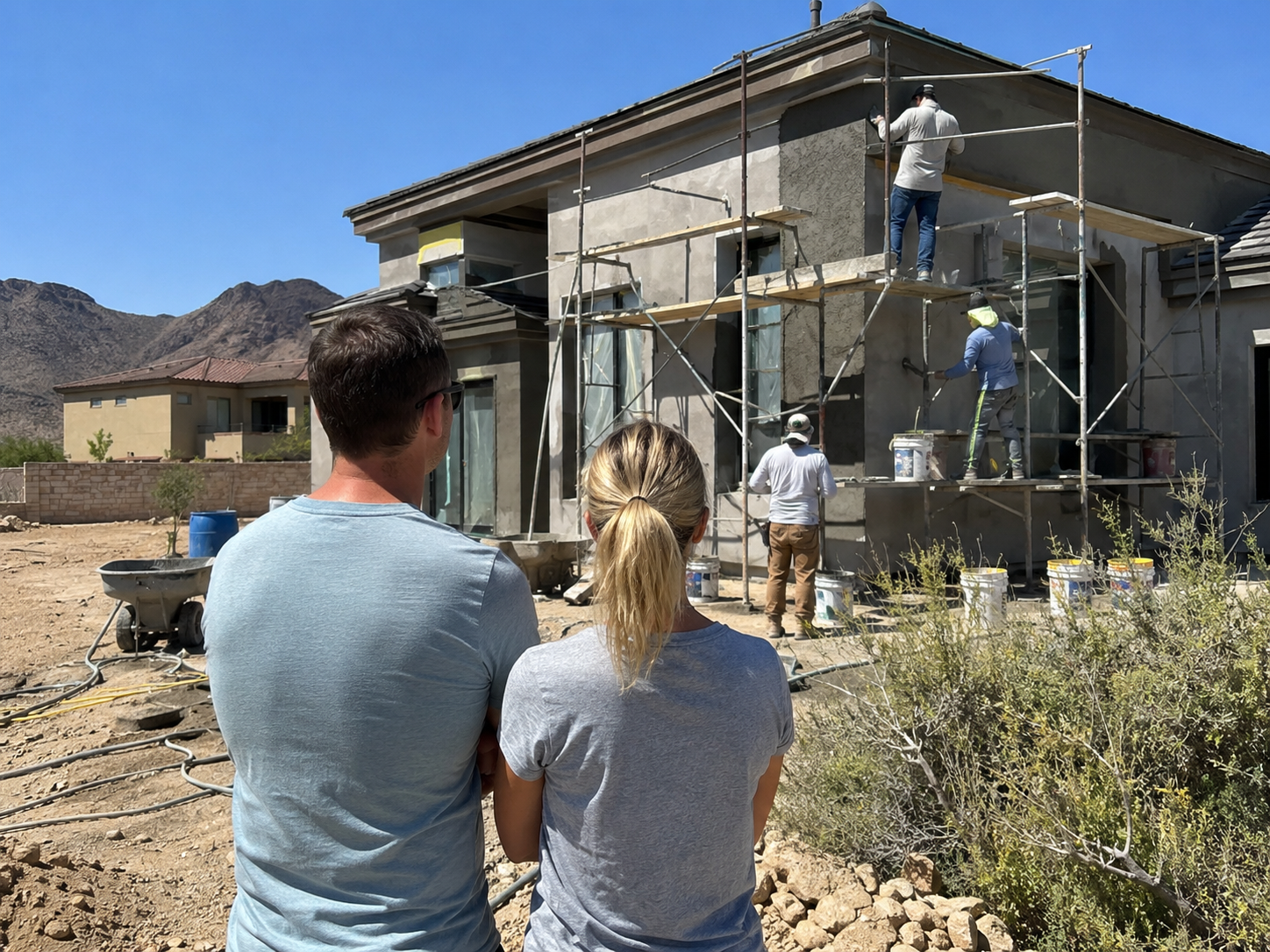
Where the deal starts to go sideways
Let’s take this out of theory and put it behind actual numbers.
Assume a build cost of $900,000 and how a 10% contract contingency increases the total project budget t0 $990,000. If the lender then overlays another 10% contingency on top of that, the underwritten cost jumps to $1,089,000. At 80% loan to value , that changes the structure immensely. Essentially, that additional layer requires $79,200 of additional cash requirement for risk that the original contract contingency was already meant to address.
Why the math gets uglier, not safer
This is where a lot of lenders lose the plot. An appraisal is not a reward for a bigger spreadsheet. The Consumer Financial Protection Bureau (CFPB) describes an appraisal as an independent assessment of the property’s value. Fannie Mae’s Selling Guide says that for new or proposed construction, the appraisal must be based on plans and specifications, an existing model home, or other information sufficient to identify the quality and character of the improvements. So, an appraisal is tied to the subject property and the market evidence supporting the market value. An additional contingency makes it harder on all parties, not just the client.
Hence the contingency trap.
A lender added construction loan contingency will inflate the budget. But that does not mean the appraised value will rise to match it. When the budget goes up and the value does not, the borrower ends up squeezed between a much larger cost basis and an appraisal that still has to clear based on real comps.
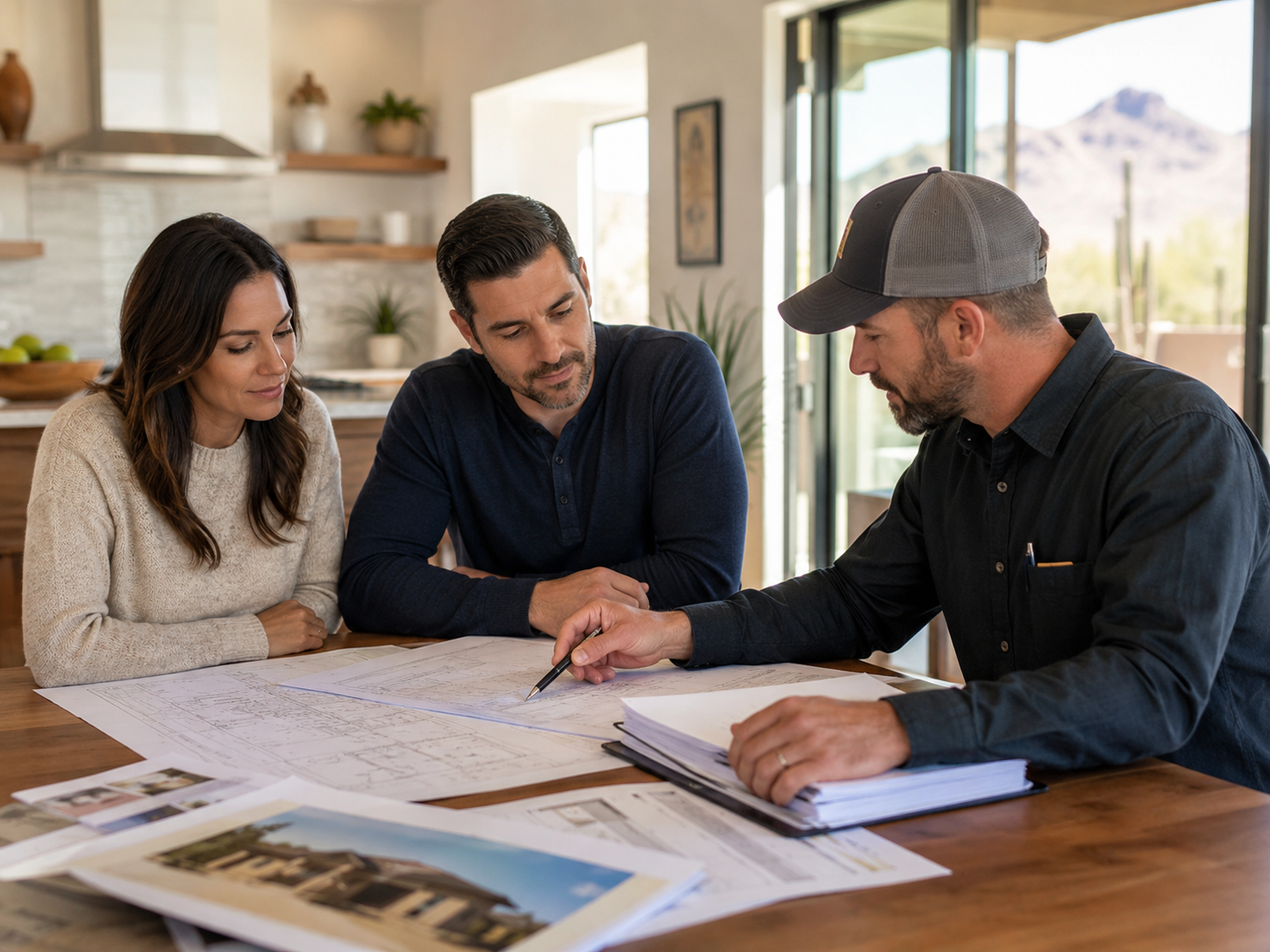
The DTI assumptions that do not belong in Arizona
The same problem shows up again in qualification. Understand when a lender is using the padded budget to size the loan or the payment, the borrower’s housing expense rises. Then some lenders stack on a generic property tax liability that does not fit the local market either.
A banket 1% of the build cost can service some states, however, Arizona is not one of them. The Arizona Department of Revenue’s property tax publications show that primary residential property is assessed at a 10% ratio, and Maricopa County publishes actual levy and rate tables by taxing jurisdiction rather than one flat statewide number. Maricopa County also explains that tax rates are developed by dividing the total levy by total assessed value. That means local tax treatment is granular, jurisdiction-specific, and absolutely not something that should be blindly reduced to a generic flat rate placeholder if better local data is available.
So when a lender overstates cost and overstates taxes, the borrower can get penalized twice by assumptions instead of facts. If your underwriter needs third party guidance, see this site and property tax calculator here.
The fix is involves a proper construction loan contingency.
You do not solve construction risk by pretending it does not exist. You solve it by putting a practical contingency where it belongs and by matching the backstop to the actual deal.
This is best practice because it,
- keeps the contingency in the contract / budget,
- documents borrower required capital to close and true reserves,
- underwrites taxes using specific benchmarks tied to comparable sales,
- supports working with a lender that understands the construction to perm’ structure well enough to offer flexibility where it actually matters.
That is where two Borrow Buy Build references can help. See Borrow Buy Build’s construction-and-lot-loan page for draw-based construction lending and conversion to permanent financing. Borrow Buy Build’s construction calculator helps borrowers model soft costs, hard costs, contingency, and insurance. AZ Construction Loan positions its Arizona construction to permanent offering around a single-close structure, and its site specifically advertises a Rate Float-Down Option and Loan Balance Modification at conversion. Furthermore, AZ Construction Loan’s Arizona Markets page also gives you a natural internal/external reference point for Arizona-specific build conversations across many of Arizona’s popular new construction markets.
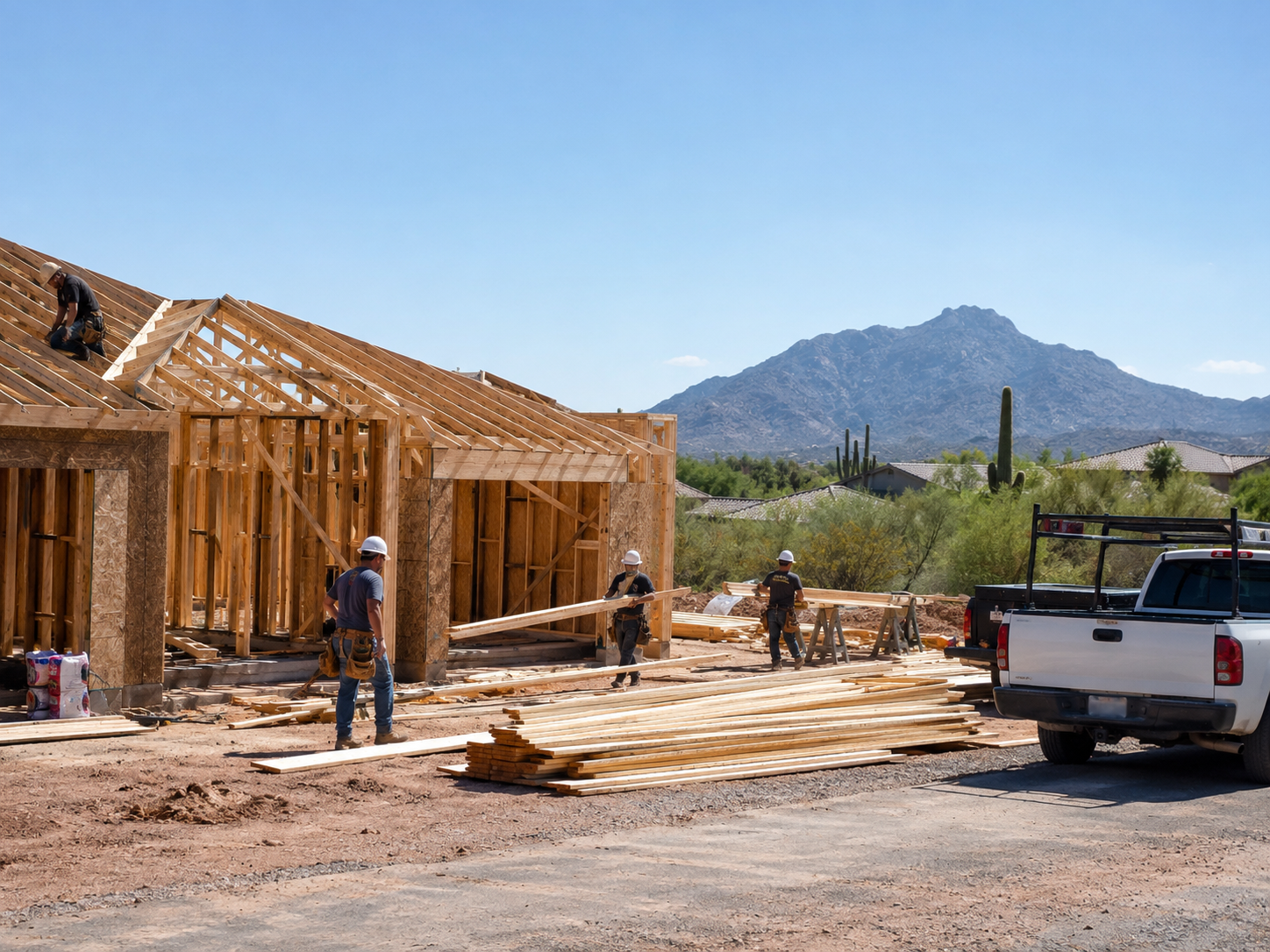
What are the best questions for a prospective client right now?
If your builder already added a legitimate contingency into the contract, and you have reserves to handle real surprises, then the right question is:
“What risk is still uncovered?”
That is the construction loan contingency question worth asking. When the answer is vague, then the overlay is probably vague too. And cloudy overlays are expensive!
Famous last words…
A contingency is proper construction lending. A second contingency does not improve risk management. If the borrower and builder have a defined budget with adequate cost breakdown, the contract should identify the uncertainty. Also, if the borrower has real liquidity to absorb tail risk, then a lender imposed contingency becomes dead weight. We illustrated how it can push up capital to close, undercut the appraisal, and increase debt to income for no real gain in loan quality.
That is the crux of the matter. This is not a debate on the purpose of a construction loan contingency. The best one is set between the client and the builder, not by the lender.
References
American Institute of Architects — Managing the contingency allowance
https://www.aia.org/resource-center/managing-the-contingency-allowance
American Institute of Architects — Standard of care: Confronting the errors and omissions taboo up front
https://www.aia.org/resource-center/standard-of-care-confronting-the-errors-and-omissions-taboo-up-front
Consumer Financial Protection Bureau — What are appraisals and why do I need to look at them?
https://www.consumerfinance.gov/ask-cfpb/what-are-appraisals-and-why-do-i-need-to-look-at-them-en-167/
Fannie Mae Selling Guide — Requirements for Verifying Completion and Postponed Improvements
https://selling-guide.fanniemae.com/sel/b4-1.2-05/requirements-verifying-completion-and-postponed-improvements
Arizona Department of Revenue — Arizona Property Taxation
https://azdor.gov/sites/default/files/2023-03/PROPERTY_AZPropertyTaxation.pdf
Arizona Department of Revenue — Property Classes / Assessment Procedures Library
https://azdor.gov/business/property-tax/property-tax-publications/assessment-procedures-library-type-and-class
Maricopa County — Tax Levy and Rates
https://www.maricopa.gov/5160/Tax-Levy-and-Rates
Maricopa County — Property Tax Bill / Tax Terms
https://www.maricopa.gov/915/Property-Tax-Bill
Borrow Buy Build — Construction and Lot Loans
Borrow Buy Build — Construction Calculator
Borrow Buy Build — Physician Loans
Borrow Buy Build — Contact
Borrow Buy Build — Book a Consultation
AZ Construction Loan
https://azconstructionloan.com/
AZ Construction Loan — Arizona Markets
https://azconstructionloan.com/arizona-markets